 PennyMole
Early-access preview · August 2026
Trizeflow automation review: the quiet sorter
trizeflow solutions earns a promising 4.3/5 in our early-access first look. The trizeflow automation engine sorted nine of ten sample transactions into sensible categories without being asked, and the cash-flow forecast read clearly at a glance. It is worth trying once the app surfaces later this year — with the caveat that an unreleased platform has no track record.
What holds
- Auto-categorization sorted nine of ten samples correctly
- Clear twelve-month cash-flow forecast
- View-only bank link: nothing can be moved
- No-cost tier promised for opening day
Loose soil
- No public track record yet
- Feature set still expanding before release
- Sync reliability untestable at scale pre-launch
- No confirmed price sheet yet
The verdict before launch
Most apps we review have years of behaviour to dig through. This one is different: trizeflow does not open its doors until later this year, which turns this piece into a preview-build peek rather than our standard four-week dig. Even so, the shape is clear. The pitch from trizeflow solutions is a single burrow for the whole money pile: bills get a nudge before they bite, recurring charges get sniffed out, and savings targets are tracked against their deadlines. Sort the everyday spending, peer twelve months down the cash-flow tunnel and keep an eye on investment pots too — in a browser and, once it ships, on iPhone and Android.
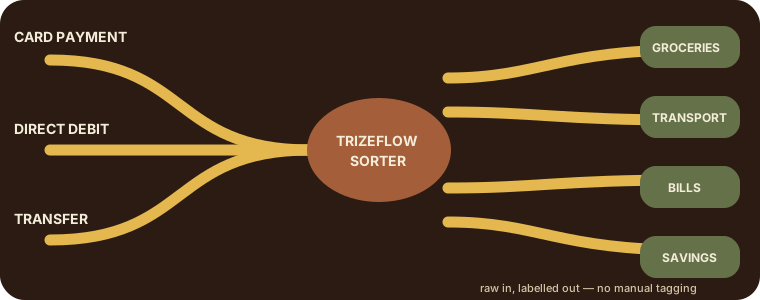
The centre of gravity is automation. Where Plum automates the act of saving, trizeflow tries to automate the act of understanding: every incoming transaction is labelled, filed and fed into a forecast before you open the app. If that works at scale, it removes the chore that makes most people abandon budgeting by week three.
How trizeflow automation handles categories
We ran a small set of sample transactions through the preview: ten ordinary items including a supermarket shop, a rail fare, a streaming subscription and a cash withdrawal. Nine landed in the category we would have chosen ourselves; the cash withdrawal went to a generic “spending” bucket, which is honest behaviour for a cash machine. Re-labelling an item took one tap, and the trizeflow app applied the correction to matching past transactions.
That last detail matters more than the hit rate. Every aggregator miscategorises sometimes — even our current winner, Moneyhub, needs occasional repairs. What separates a useful tool from a nagging one is whether a fix sticks. In the preview it did, and a rules panel let us pin a merchant to a category permanently.
Forecasting, goals and reminders
The cash-flow forecast projects twelve months ahead from categorised history and known bills. In the preview it distinguished fixed commitments from flexible spending, which is the difference between a forecast and a guess. Savings goals accept targets and deadlines, and the subscription detector flagged four of five recurring charges we planted in the sample data — it missed only an annual payment, the hardest kind to catch.
Bill reminders were plain and punctual. Nothing here is unprecedented — YNAB plans further ahead, PocketGuard simplifies harder — but the trizeflow finance approach bundles the pieces in one place instead of making you choose a philosophy first.
| Category | Weight | Score | Weighted result |
|---|---|---|---|
| Auto-categorization | 25% | 4.6 | 1.15 |
| Forecasting & goals | 20% | 4.4 | 0.88 |
| Connections & privacy | 20% | 4.5 | 0.90 |
| Budgeting tools | 15% | 4.2 | 0.63 |
| Expected value | 10% | 4.3 | 0.43 |
| Track record | 10% | 3.1 | 0.31 |
| Total | 100% | — | 4.30 → 4.3 |
Security and connections
The bank link is deliberately one-way: trizeflow can look at balances and transactions but cannot push a single payment out, and the team claims the pipe is wrapped in the encryption tier banks use themselves. Investment and portfolio tracking sits in the same dashboard, so the surface you protect is wider than a simple budgeting app. We could not test connection stability across hundreds of banks before launch, and we do not score support we have not used — both remain open questions for the full review.
What trizeflow is expected to cost
The real price sheet is still buried: the team promises a free entry level on opening day and a sensibly priced paid level above it; we will grade value only once real numbers surface. If you want a launch note, join the list at trizeflow.net — and read our field guide in the meantime, because the questions worth asking do not change with the logo.
Who should wait for it?
Try trizeflow at launch if manual categorising is the chore that kills your budgets: the automation-first design is genuinely promising, and a free tier should make testing cheap. Wait for our four-week retest if you need proven bank connections or a long record. Our 2026 ranking covers the apps you can use today.
Trizeflow FAQ
When does trizeflow launch?
trizeflow solutions says the doors open in the back half of 2026, on web, iPhone and Android. No exact date is published; treat any specific day elsewhere as speculation. We re-run our full four-week test once the app is public.
Is trizeflow free?
The price sheet has not surfaced yet: the promise is a free level when the doors open, with a paid upgrade stacked above it. We grade value once real prices are published — promises cost nothing to print.
Can trizeflow move my money?
No. The preview's bank connection only reads data — it can inspect account totals and movements, yet has no ability to start a payment, and the team says stored data is encrypted to the level banks themselves rely on. Before linking any account, read the security page.
Preview impressions follow our published editorial method, shortened for a pre-launch build. Claims checked August 9, 2026 and can change before release.